
No „Forever“ for PFAS
A solution initiative for „Forever Chemicals“
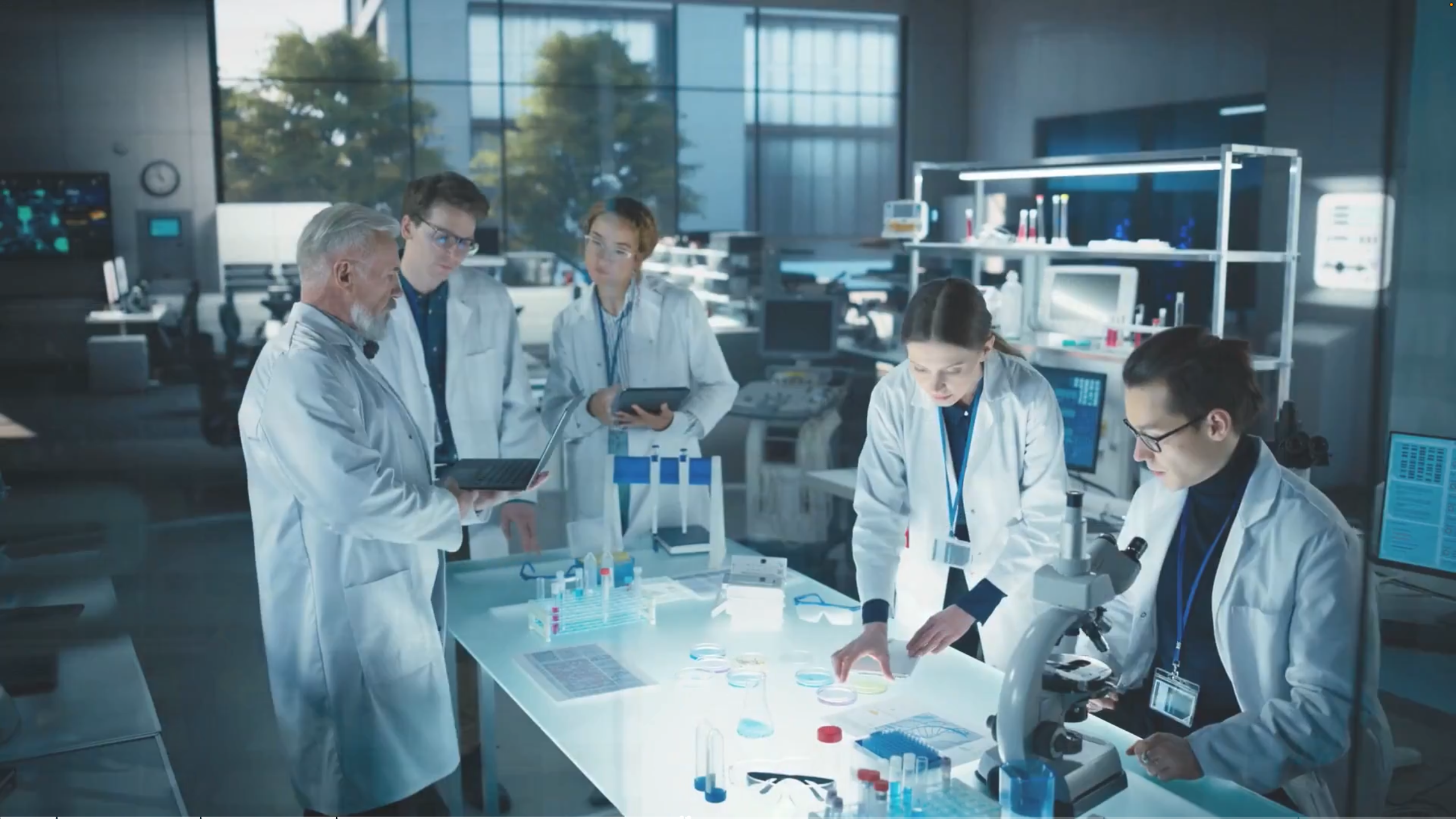
PFAS are a problem that will affect generations to come. Together we can solve it.
PFASolve is a vision that needs partners
to become reality.
The industry isn't waiting for a solution.
It is taking responsibility for developing one together.

TARGET
100 Mio. € for 10 Years

Starting Threshold
12 Mio €

Start
Autumn 2027
Why now?
PFAS are not just an environmental problem. They affect drinking water, industry, healthcare, contaminated sites, waste streams, recycling, and the future of functional materials.
Europe possesses broad excellence, but expertise is dispersed across disciplines, countries, and stakeholder groups. As a result, solutions are often developed in isolation for highly specific applications, making them difficult to compare and evaluate and, consequently, slow to translate into practice.

We bridge the gap
between research and implementation.
Regulation creates pressure to act:
PFAS are increasingly subject to mandatory regulation in Europe. EU-wide PFAS parameters for drinking water have been in effect since January 12, 2026: Member states must monitor and comply with either the sum of 20 PFAS at 0.10 µg/L (100 ng/L) or the total PFAS parameter at 0.50 µg/L (500 ng/L); stricter national requirements remain possible.
At the same time, individual PFAS groups are being phased out gradually. Organizations must therefore quickly determine where PFAS occur, how reliably they can be measured, which treatment methods are effective, and where effective alternatives are available.
The time for isolated, individual measures is over. What is needed now is a shared infrastructure for evidence, technology validation, and implementation.

Further Information
Our Mission
From detection to destruction. From measurement to practical solutions.

The international PFAS SOLVE Hub develops and connects solutions across the entire PFAS life cycle: identifying sources, preventing emissions , reliably measuring contamination, understanding risks, removing or destroying PFAS, and translating high-performance alternatives into industrial applications. Our goal is not scientific excellence alone. Our goal is to find a solution that works in a laboratory, a water treatment plant, an industrial facility, or a real-world material stream.
An international problem - a collaborative solution.
PFAS cross borders
From knowledge to effective implementation.
We bridge the gap
Open to innovation, but solution-oriented.
We combine
A hub for co-creation, not for parallel projects.
Partners share
Our Program
1.
Detection
Aim
Screening and monitoring of wastewater, seepage water, soil leachates from contaminated soils, and industrial process steps
Technology
Biosensors (e.g., using PFAS-binding aptamers), photometric on-site tests, multiplex-capable systems, real-time monitoring
2.
Concentration
aim
Selective PFAS Binding and Concentration in Soils, Landfill Leachate, Groundwater, Sludge, Waste, and Process Streams
Technology
Adsorption, ion exchange, membranes, foam fractionation, use of high-affinity peptides, proteins, and bio-based binding materials
3.
Elimination
Aim
Transformation, defluorination, or elimination of PFAS
Technology
Enzymatic applications of dehalogenases and other microorganisms and enzymes; chemical, electrochemical, thermal, and photochemical processes, and hybrid chains.
4.
Verification
AIM
A Common Basis for Verification for All Development Pathways
Technology
Target substance and precursor analysis, substance and fluorine balances, intermediate and byproduct analyses, residual toxicity
5.
Implementation
AIM
Turning Effective Technologies into Practical Solutions
Technology
Integration into existing facilities; operational, maintenance, and permitting issues; scaling processes
Our Network
Let’s build a strong hub of experts
You will gain early access to complementary expertise, joint funding strategies, demonstration partners, and a visible European network.
Requested Profiles:
- Research organizations and universities: environmental chemistry, analytics, biotechnology, materials science, toxicology, LCA, and digitalization.
- Water management, municipal stakeholders, environmental agencies, and operators of PFAS-contaminated sites, including airports, fire departments and fire protection services, fuel storage facilities, refineries, chemical parks, and ski resorts.
- Technology providers for analytics, sensor technology, water/wastewater treatment, remediation, and destructive methods.
- Industries with PFAS-related products, processes, or supply chains – including electronics, semiconductors, batteries, electroplating and surface treatment, paper and packaging, textiles, automotive, aerospace, pharmaceuticals, medical technology, chemicals, food, and plant and machinery manufacturing.
- Agriculture, farming, ecology
- Recycling, waste management, and circular economy partners.
- Standardization, regulatory affairs, procurement, financing, and impact investing.
Our Model
Become a full member and
- Gain access to all scientific and technical findings
- Contribute your own PFAS-related challenges as use cases
- Have a vote on guidelines and priorities in the Program Council
- Participate in expert teams
- Gain a knowledge advantage over competitors who are not participating
Founding Member
Annual membership fee
starting at 250.000 €
Commitment
5 years, up to 10 years possible
votes
4
Election of the Industrial Advisory Board, protection of the core provisions of the bylaws, fixed contribution during the first term; experts for at least two expert teams. Available only until the end of the founding phase (fall 2028).
Strategic Member
Annual membership fee
starting at 100.000 €
commitment
5 years
votes
3
Nominations for the Industrial Advisory Board; Experts for at least two expert teams; Test environment, if available
Core Member
annual membership fee
50.000 €
commitment
3 years, extension possible
votes
2
Program Council
Associate Member
Annual membership fee
10.000 – 25.000 €
commitment
3 years
votes
1
Program Council
Or participate as a programme partner without formal membership, working on the basis of individual agreements.
- Scientific Partner: Scientific Expertise and Research Environments; Host Institution for Embedded Staff
- Technology Partner: Processes, Materials, Sensor Technology, Digital Systems, Engineering or Production Expertise
- Application & Demonstration Partner: Samples, Material Flows, Operational Data, Facilities and Testing Sites
- Project & Scale-up Partner: Fund or Enable Clearly Defined Pilot, Demonstration and Scale-Up Projects
Supporting members – such as foundations, associations or companies – support the mission without participating in programmes and without voting rights. Public institutions may participate as programme partners, associate members or supporting members.
Financing
A phased approach - each phase with its own funding threshold:
Establishment of Solution Initiative; four-year startup program at the acib incubator.
Solution initiative acquires the team, contracts, and rights, and conducts its own research.
The thresholds are cumulative; they do not represent additional amounts that must be raised. In addition, the Solution Initiative may claim the Austrian
research grant (14% of eligible research expenses)—for an annual budget of €10 million, this amounts to approximately €1 million per year, provided the conditions are met; this grant is not part of the financing model.
Contact


Accept our invitation and
become
a member
By registering, you are expressing your interest in our network and your desire to contribute to solving the PFAS issue – whether through scientific or technological means, as a use case or industrial user, as a benchmark, as a government agency, or even just through financial support – your contribution is welcome!
At an interactive kick-off founding workshop on March 15–16, 2027, at the NH Hotel, Vienna Airport, we invite registered founding partners to work on an initial research agenda, identify relevant gaps and use cases, and lay a solid foundation for the hub for tomorrow’s PFAS solutions.
Join our initiative!
PFAS-SOLVE is an initiative of acib – the Austrian Centre of Industrial Biotechnology – dedicated to connecting research, technology and industry to develop practical solutions for the detection, concentration, and removal of PFAS, as well as for the verification and implementation of new processes.